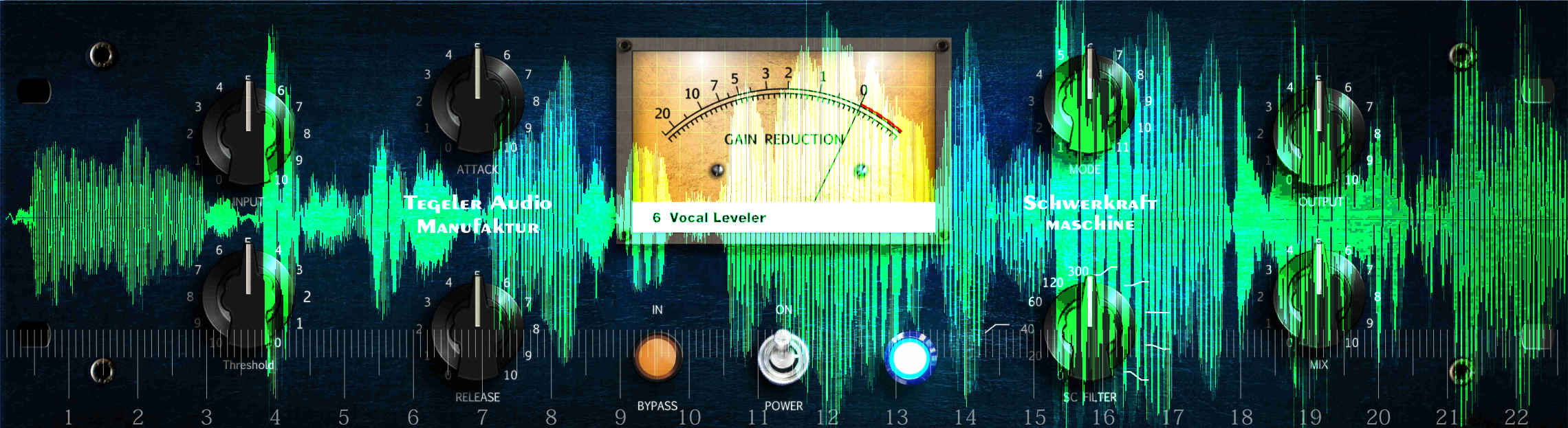
Schwerkraftmaschine Vocal Leveler Explained
- 23.01.2017
- Michael Krusch
- Story
- Schwerkraftmaschine
Part 6 of our review of the different compression modes in the Schwerkraftmaschine
Where the Vocal Leveler Comes From
This mode is based on our successful Vari Tube Recording Channel.
We came up with something clever for the VTRC compressor.
The goal was to let it be controlled by just one switch, with the capability to adapt to all typical solo instruments, especially vocals.
Which poses a bit of a dilemma:
Set the compressor timing to short, and it reacts quickly to any changes, especially explosive sounds. Unfortunately the voice's dynamic nuances can get lost in the process. The signal becomes compressed and narrow.
You can select a slow timing to promote breathing, but then the compressor tends toward pumping. Spikes in the signal can force it down, leaving audio artifacts as it recovers.
Two Control Circuits Instead of One Compromise
To retain the best of both processes while avoiding the downsides, the Vocal Leveler features two separate control circuits.
One slower to compensate for longer changes to the level, similar to using the automation feature on the DAW.
And another quicker one, capable of capturing short spikes in level.
But which then releases quickly once the spike is done.
The final result is a comparator circuit that compares the control voltage on both control circuits and reproduces the higher of the two on the compressor.
In this way, the compressor can keep the level relatively constant, react briefly to a spike and then continue on from the previous point.
The solo signal then retains its microdynamics, has balanced average levels and is prominent in the mix without having the feel of being compressed flat.
If you hear the vocal track on its own, you'd think it hasn't been compressed at all. If it works well in the mix and can be heard clearly without having to turn it up, then you know that the compressor has done its job well.
But compression isn't the only thing you'll hear. There's also the Schwerkraftmaschine's soft, round, 'golden' tube and transformer sound.
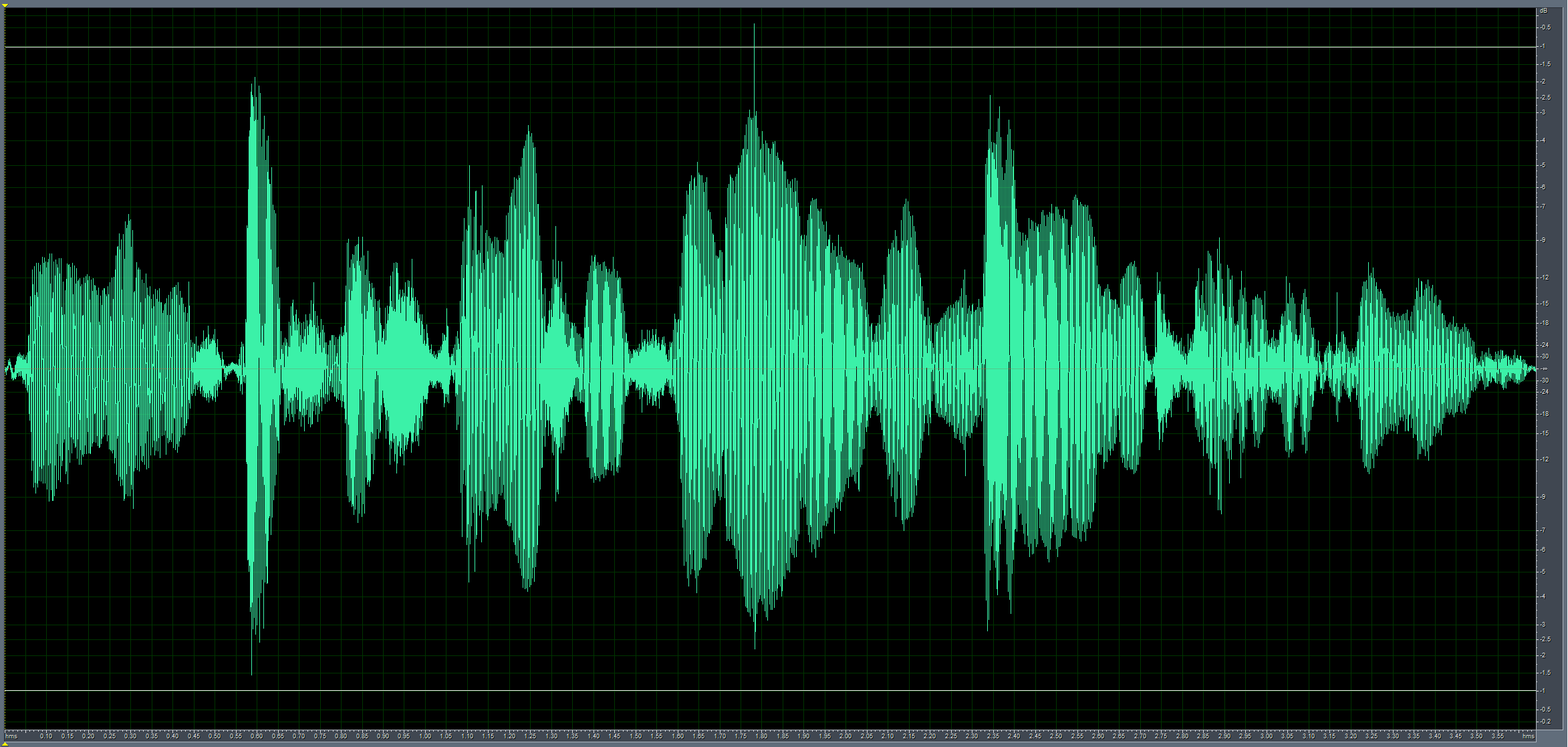
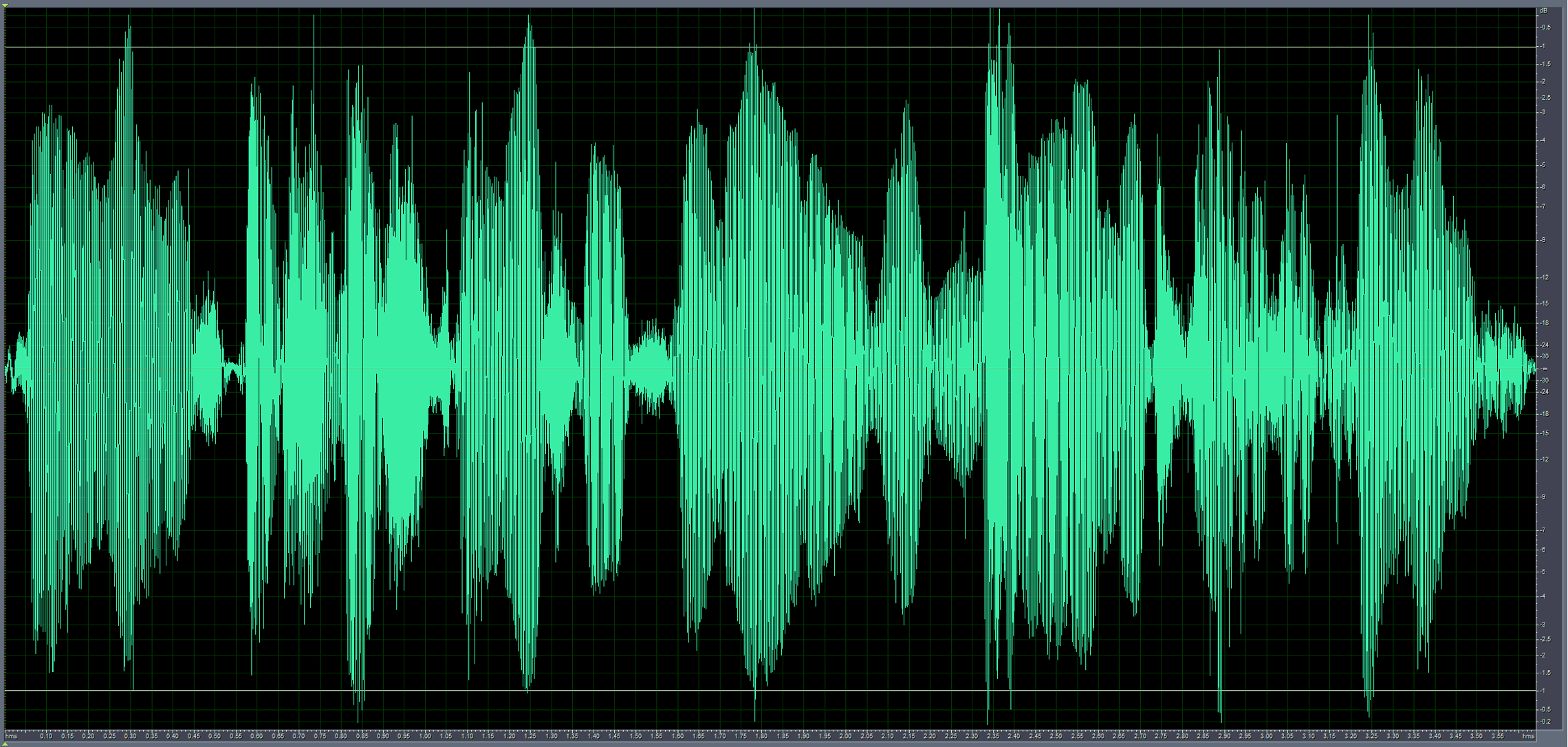
Move the slider for a before/after comparison.
What the Vocal Leveler Does in a Mix
The mode essentially replaces two steps: evening out level changes over time, which you'd otherwise do with fader automation, and catching individual peaks, which you'd otherwise put a fast compressor in front for. Because the slow circuit only follows the average level, the microdynamics of the voice stay intact – the part that makes a recording feel alive. The fast circuit only steps in when a peak really sticks out, and it's gone again right after. That's exactly why the track sounds uncompressed on its own and still sits in the mix.
As in every mode, the Schwerkraftmaschine's side-chain filter works on top: with the low-cut you keep plosives or proximity-effect bass from driving the compression. And via the plug-in the settings are saved with your song – the next time you open it, the motorized pots return to exactly where they were.
Not Just for Vocals
Even if this program was developed with vocals in mind, it also works well on other solo tracks, from electric guitar and bass to violins and brass instruments.
Don't be afraid to give it a try.
Not to be confused: the Vocal Leveler 500 is our 500-series opto compressor – a standalone unit in API 500 format, not a Schwerkraftmaschine mode. The name is the same because the job is the same: leveling solo tracks without squashing them.
The Video: Vocal Leveler in Action
Interested in testing the Schwerkraftmaschine for 14 days in your studio?
Simply register here
The Series: All 11 Compression Modes of the Schwerkraftmaschine
Part 1: Multi-Band Complex · Part 2: Diode Pressor · Part 3: Breakthrough · Part 4: Stereo Transformer (MS Processing) · Part 5: Schwerkraftmaschine vs. Vari Tube Compressor · Part 6: Vocal Leveler · Part 7: Optical Compressor · Part 8: Drum Smasher · Part 9: Classical VariMu · Part 10: Chart Analysis · Part 11: Deesser
Related: Wake Me Up: Vocals with VTRC & Schwerkraftmaschine – the Vocal Leveler in a real session · Lauren Passarelli on the Vari Tube Recording Channel
