Mixing and Mastering with a Little Creme
- 06.09.2013
- Michael Krusch
- Artikel
- Mixen
- Mastering
- Creme
Is mastering even still necessary these days?
Why it's nonsense to mix with a compressor and equalizer on the master bus – and why so many professionals do it anyway
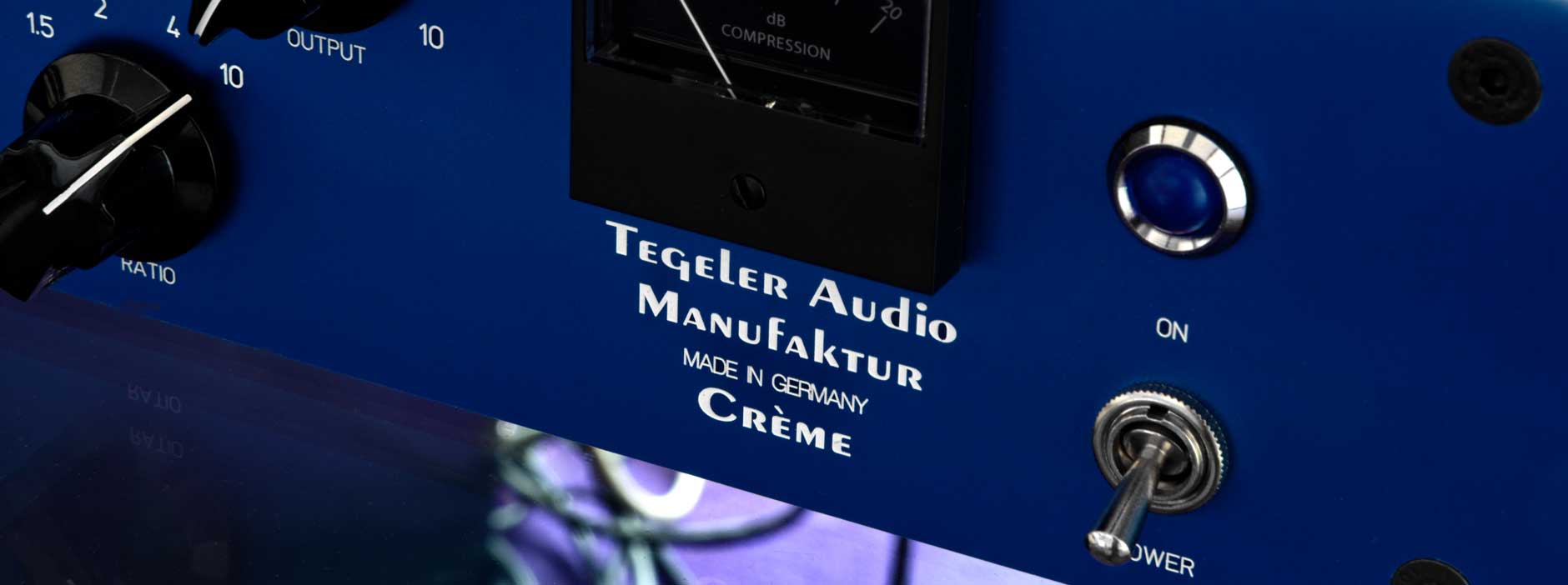
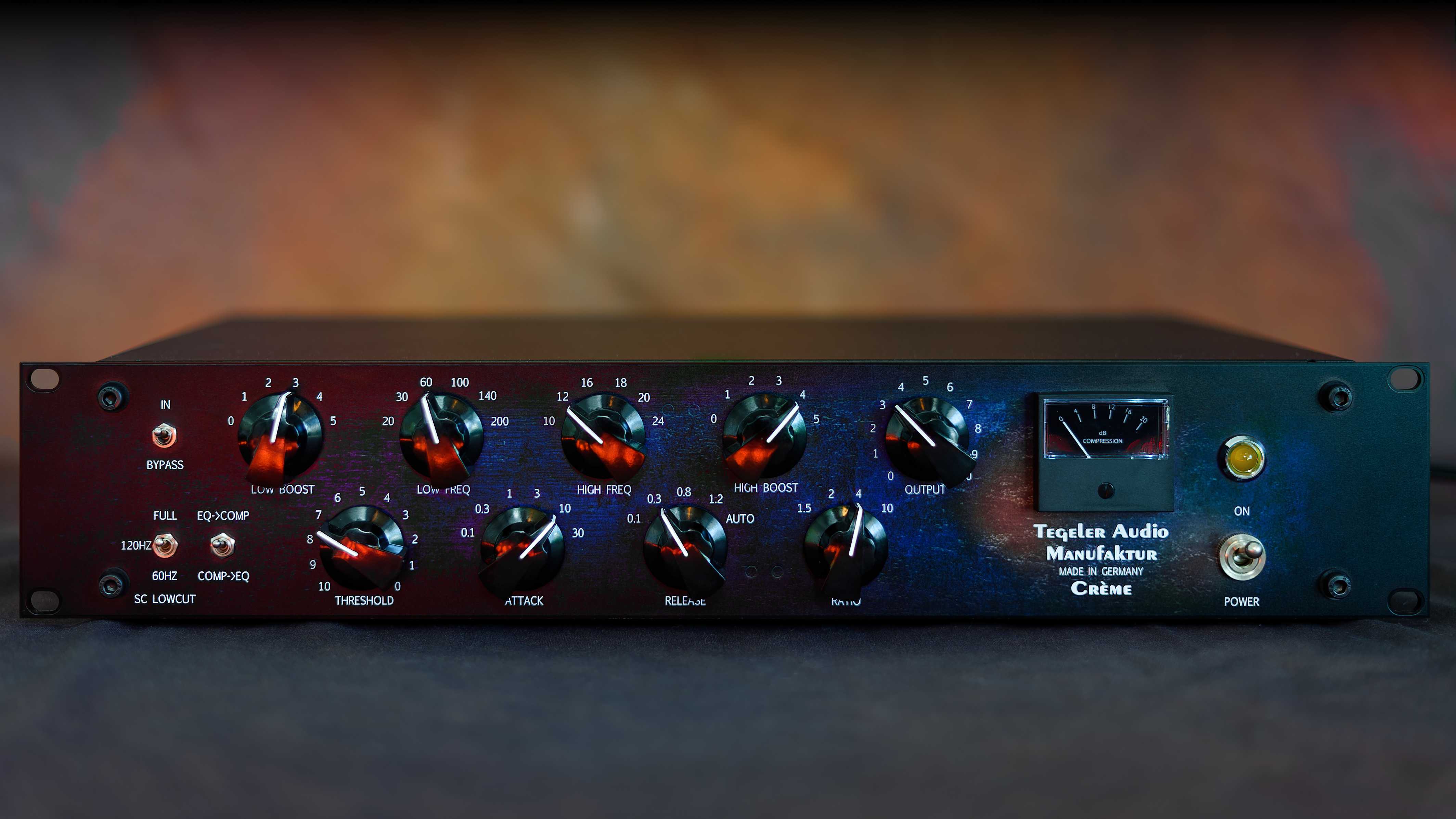
This article explains the idea behind the Creme, our bus compressor and mastering equalizer.
Functionally, mixing and mastering actually have a great deal to do with one another, yet they're often quite far apart in time. The goal of both processes is to create an overall picture that's balanced and compact, yet still appropriate to the material.While mixing gives you access to all the individual signals involved, as well as the ability to manipulate them, the mastering engineer is faced with the task of processing an already-finished mix and preparing it for its imminent, permanent life on the finished recording.
Compared to mixing, the mastering engineer has relatively little influence left over the existing dynamics and the frequency balance of the individual signals, or their level relationships within the mix.
Serious mistakes in the mix often make a new mix necessary — just as a recording mistake, such as a badly positioned microphone or an out-of-tune instrument, can be very difficult to compensate for at the mix stage, sometimes requiring the signal to be re-recorded entirely.
It helps if the mixing engineer was already able to anticipate, or take into account, the results of mastering while mixing…
Why not just solve the problem right away?
So why not simply use mastering-style equipment during the mix, to get a sense of the bigger picture right away?Granted: actual mastering should still be left to a specialist in the field, if only because of their experience. The more specialized equipment of a mastering studio, geared toward its specific task, also speaks for itself and covers considerably more post-processing possibilities.
Still, incorporating similar equipment into the mix bus is helpful, and it avoids mistakes that can no longer be corrected afterward.
Now, let's get practical
So how do you approach a mix when you're mixing with a bus compressor?Well, usually not all that differently from normal. In principle, it's correct to mix the main tracks together as usual before bringing in the bus EQ and compressor.
Which tracks count as the "main" tracks depends on the tonal structure of the material at hand.
Mixing certain signals down to subgroups pays off especially when you want to bring (functionally) related tracks (e.g. string sections, horn sections, percussion and drums or similar) into the mix as a single unit.
Compressing individual tracks as well as the groups themselves, and treating them as equal contributors to the overall mix, simplifies things enormously, since the level relationships within each group are already fixed and only the balance between groups still needs adjusting.
Once the basic framework is in place, you're usually sitting just a bit below nominal level on the mix bus. Adding further quiet signals and effects on top of an existing main mix then tends to bring only small further level changes.
At some point, the moment comes to bring in the bus compressor and, if applicable, the bus EQ as well. Switching on bus compression after roughly setting the level relationships of the individual tracks is always a special moment, one that, with a reasonably functioning mix, usually puts a smile on the engineer's face.
What now becomes apparent
Listening more closely, you'll often notice that one signal or another dominates the mix strongly at certain points and „pushes down“ the rest of the mix.Without bus compression, this effect is only audible once there's no longer enough headroom available, assuming the mix is happening in the analog domain – so not at a correctly set bus level.
But since compressors reduce dynamics, the quiet signals get „left behind“ once bus compression is engaged. The loudness differences within the overall signal shrink, and so, in a sense, only a certain bus level has room in the remaining overall dynamic range.
We turn it into something good
This effect can be put to very good use to even out the levelling of the signals. That way, the entire mix gets a homogeneous loudness curve, without even bringing in a limiter yet.If, for example, the hi-hat cymbals are too high in level, the volume of the other instruments dips back whenever the hi-hat comes in. It's considerably harder to set the right hi-hat level without the compressor. Skilled, experienced mixing engineers will disagree here – of course, the levelling of certain signals isn't (exclusively) guided by technical considerations.
Quite the opposite: the volume relationships arise from the material being mixed, under artistic considerations.
What the equalizer has to do with it
Even so, a balanced frequency response on the mix bus is crucial to how a mix is perceived. Too little top end, or too little level from instruments living in that frequency range, often makes a mix sound „murky“ and lacking freshness.On the other hand, a harsh or cold impression often results when warmth is missing from the low end. Even this example makes clear just how closely mixing and mastering are related. The mixing engineer has considerably more selective options for giving the mix a particular „look.“
Besides influencing the frequency response and the dynamics of individual instruments or groups, the mixing engineer also has a tool at their disposal that no mastering engineer can fall back on: simply levelling the tracks in use to create a homogeneous spectrum.
These methods of shaping dynamics, frequency, and level are, in any case, preferable to using multiband compression and making heavy-handed interventions in the frequency response of the overall signal via EQ on the bus.
In this respect, mastering's tools mostly represent „only“ a supplement to the possibilities already available in the mix, not a replacement for them.
For these tools to be used in a truly complementary way, it makes sense to already establish, during the mix, the conditions that help the engineer correctly assess the mastering situation.
And Now, Over to You: Test the Creme Bus Compressor Yourself
Reading a lot is one thing. Listening a lot is much better. That's why we're offering you the chance to test the Creme for 14 days in your own studio.The Creme helps you improve your mix. You can experience it for yourself.
Want to test the Creme in your own studio for 14 days?
Register here
Related: Creme in a Haystack: Mastering at Bonnaroo · Production Expert: SKM, EQP-1 & Creme Mastering · Creme & EQP-1 Live: Robin Schulz at World Club Dome
